

Author: SEA Team K.C.
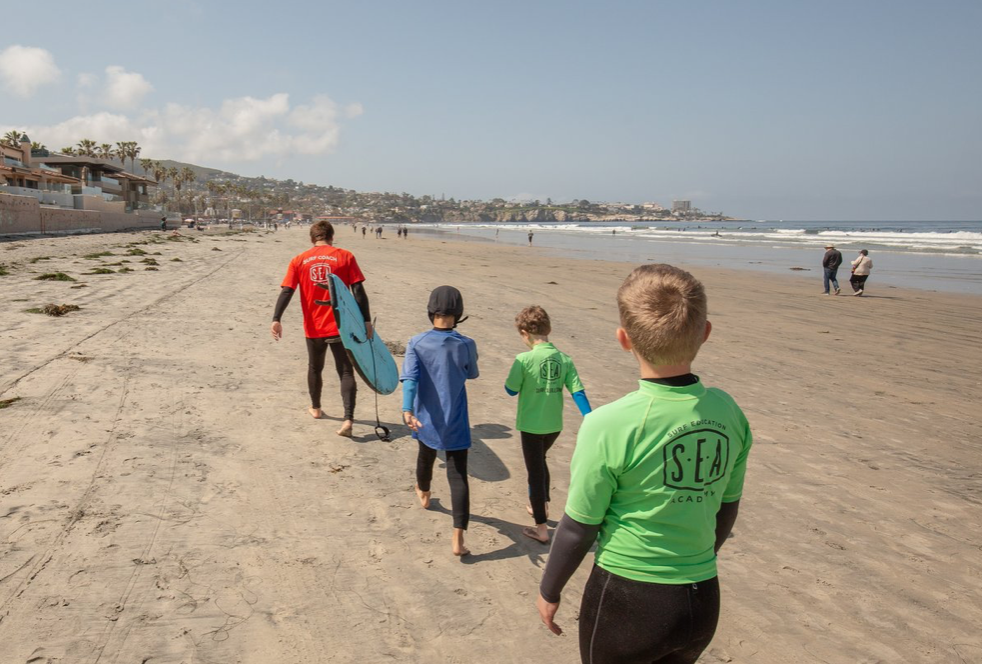
Walk onto La Jolla Shores at sunrise and you’ll feel it instantly—the rhythm of waves, the glide of longboards, the quiet anticipation of surfers waiting for the next set.
This isn’t just another California beach.
It’s one of the most important learning grounds in American surf history—a place where beginners catch their first wave, legends refined their craft, and a culture rooted in respect for the ocean continues to thrive.
If you’ve ever surfed here—or are about to—you’re part of that story.
The Early Days of Surfing in La Jolla Shores
Surfing arrived in California in the early 1900s, carried by the stoke and skill of Hawaiian watermen like George Freeth. Often called the “Father of Modern Surfing,” Freeth wowed crowds up and down the coast with his demonstrations, planting the seeds for what would become a full-fledged West Coast surf culture. His influence is so lasting that his legacy is honored in places like the California Surf Museum.
While Redondo Beach and Huntington Beach saw some of the first California surfers, La Jolla Shores soon became part of the movement. Surfing didn’t start in California—it was brought here in the early 1900s by Hawaiian watermen like George Freeth and Duke Kahanamoku.
These pioneers introduced wave riding to the mainland, inspiring coastal communities across Southern California—including San Diego—to embrace the sport.
By the 1920s and 30s, La Jolla Shores had become a natural hub for early surfers thanks to:
- A gentle sandy bottom
- Consistent, rolling waves
- A protected position along the coast
At a time when surfboards weighed up to 100 pounds, these conditions weren’t just ideal—they were essential.
By the 1930s, a dedicated crew of locals was paddling out here regularly. These early surfers didn’t just ride waves—they built a community that valued ocean respect, camaraderie, and passing knowledge to the next generation.
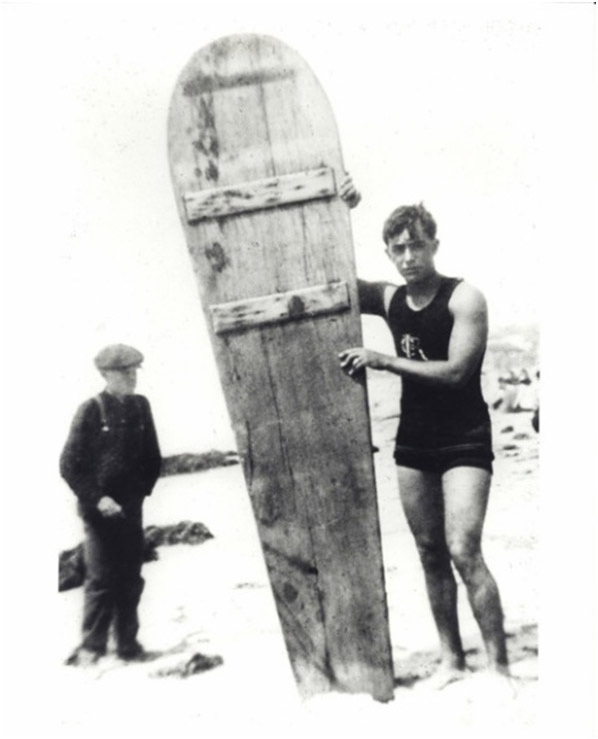
The Rise of a Surf Community (1930s–1950s)
As surfing gained traction, La Jolla Shores evolved into more than a surf spot—it became a tight-knit coastal community.
Local surfers weren’t chasing fame or competition. They were building something deeper:
- A shared respect for the ocean
- A culture of mentorship
- A commitment to passing knowledge down
Even as nearby breaks like Windansea grew in reputation, the Shores developed its own identity: approachable, consistent, and community-driven.
The Shores in the Golden Age of Surfing
The 1950s and 60s marked a turning point. Post-war optimism was in the air, and surfboard design was evolving rapidly— Films like The Endless Summer and music from The Beach Boys put surfing into the cultural spotlight, and La Jolla Shores was right there.
With the rise of foam and fiberglass boards, surfing became faster, more dynamic, and more accessible. At the same time, surf culture exploded into the mainstream through films and music.
La Jolla Shores was right in the middle of it.
During this era:
- Local surf clubs and contests emerged
- High school surf culture thrived
- Generations of San Diego surfers got their start here
The Shores became known for something rare:
👉 A place where beginners could learn—and never leave.
What made the Shores special was its balance: gentle, forgiving waves for beginners and just a short paddle away, more challenging breaks like Scripps and Black’s Beach for advanced surfers. Many locals still say, “The Shores is where you learn to surf—and where you learn to love the ocean.”
What Makes La Jolla Shores Unique for Surfers
- 1. Ideal Wave Mechanics for Learning
La Jolla Shores offers slow-breaking, forgiving waves that give beginners more time to pop up, stabilize, and ride—making it one of the most effective environments for skill development.
2. Sand-Bottom Safety Advantage
Unlike reef or rock breaks, the soft sandy ocean floor reduces injury risk, allowing new surfers to build confidence without the hazards found at more advanced spots.
3. Natural Skill Progression Zone
Surfers can gradually challenge themselves by moving along the coastline, transitioning from mellow whitewater to more powerful peaks without needing to change beaches.
4. Access to High-Performance Waves Nearby
Just beyond the beginner zone, experienced surfers can find steeper, faster waves near Scripps Pier and the powerful reef break at Black’s Beach—making it a rare all-level surf ecosystem.
5. Strong Local Etiquette Culture
La Jolla Shores maintains a respectful lineup where awareness, turn-taking, and acknowledgment of other surfers are part of the daily rhythm—not just unwritten rules.
6. Located Within a Protected Marine Environment
Situated near the La Jolla Ecological Reserve, the area benefits from cleaner water, thriving marine biodiversity, and long-term environmental protections.
7. Consistent Conditions Year-Round
Thanks to its coastal orientation, La Jolla Shores receives steady swell and remains surfable throughout the year, making it a reliable destination for both lessons and regular practice.
Why This History Still Matters (A Surfer’s Perspective)
Understanding the history of La Jolla Shores changes how you surf it.
You’re not just:
- Standing on a board
- Riding whitewater
- Taking a lesson
You’re participating in a 100+ year tradition shaped by pioneers, locals, and ocean lovers.
That perspective creates better surfers—because it builds:
- Confidence
- Awareness
- Respect
Surf Education Academy’s Role in the Story
At Surf Education Academy, we don’t just teach surfing. We teach why this place matters.
Our approach is built on three pillars:
✔ Local Knowledge
Understanding tides, swell direction, and conditions specific to La Jolla Shores.
✔ Ocean Safety
From rip currents to lineup awareness—skills that last a lifetime.
✔ Community Connection
From surf camps to mentorship, we help students become part of the local culture.
Many of our instructors started as students here—proof that the cycle continues.
Many of our instructors started as kids in programs like SEA and are now mentoring the next generation—keeping the cycle of local surf knowledge alive. You can explore more in our other blogs.
Giving Back: Conservation and Community
Surf history means nothing without a healthy ocean to surf in. That’s why SEA is committed to protecting the coastline we call home.
Surfing only exists because the ocean does. That’s why preserving La Jolla Shores is essential—not optional.
Ongoing efforts include:
- Beach cleanups
- Youth access programs
- Marine conservation awareness
Because the next generation deserves the same experience we have today.Our belief is simple: the more you love the ocean, the more you’ll fight to protect it.
Local Insight: The Culture of the Shores
Ask a La Jolla surfer about their first wave and you’ll likely get a detailed play-by-play, right down to the smell of neoprene and the taste of saltwater. This beach breeds memories that stick. Dawn patrol sessions with just a few friends, summer afternoons filled with surf camps, and winter swells that light up Scripps—it’s all part of the rhythm here.
FAQs About Surfing History at La Jolla Shores
Was surfing invented here?
No. Surfing originated in Polynesia and Hawaii, but La Jolla Shores became one of California’s most important surf communities in the 20th century.
Who are some of the local legends?
Skip Frye, the Ekstrom brothers, and countless homegrown talents who came up through local schools and competitions have helped shape San Diego’s reputation in the surf world.
Is it beginner-friendly year-round?
Yes—though winter swells can be bigger, the beach break remains forgiving compared to more exposed spots.
How can I get involved in the community?
Join a beach cleanup, sign up for a lesson, or simply paddle out and share the stoke. Every respectful surfer becomes part of the Shores’ ongoing story.
Ready to Ride?
The history of La Jolla Shores is still being written—wave by wave. Whether you’re catching your first whitewater ride or trimming down the line at sunrise, you’re part of a tradition over a century in the making.
Join us at Surf Education Academy, where every wave is more than a ride—it’s a connection to the ocean, the past, and your own personal surf journey. You can book your surf lesson today and be part of the next chapter in this iconic beach’s history.
 The Science Behind Waves and Their Importance to Our Ecosystem