
By Surf Education Academy coaches · Updated May 2026 · 15 min read
Tags: surf camp packing list, La Jolla Shores surf camp, kids surf camp San Diego, summer surf camp 2026, what to bring to surf camp
Real talk — every parent shows up to their kid’s first surf camp day with the wrong bag.
Too much of the wrong stuff, not enough of the right stuff, and at least one thing that makes our coaches quietly smile and say nothing. We’ve been there. We’ve seen it all.
After coaching 500+ kids through summers at La Jolla Shores, we know exactly what separates the kid who ends the week begging to come back from the one who’s mentally done by Wednesday. It’s not talent. It’s not age. It’s three things: sun protection, staying warm between sessions, and keeping energy up.
That’s it. Everything else is just logistics.
So here’s the exact list — straight from our coaches, nothing padded. And hey, if you’re still picking your week, Summer 2026 camp spots at La Jolla Shores are open right now — but they go fast.

What We Already Take Care Of (Don’t Buy These)
Before we even get into packing, let’s clear something up — because this is the number one thing first-time camp families get wrong.
You don’t need to buy a surfboard or a wetsuit before camp.
Here’s what S.E.A. already provides:
- Soft-top surfboards matched to your kid’s size and skill level
- Wetsuits or rash guards based on water temperature that day
- Leashes, safety gear, structured daily curriculum — all of it
- CPR, First Aid, Lifeguard trained, Ocean safety-certified instructors, never more than 5 students per coach in the water
- A daily surf camp jersey for each camper — we use a color system to keep our surf groups organized and visible in the water
That jersey thing? It matters more than it sounds. Your kid is part of a crew from day one. They’re visible, accounted for, and on a team.
Oh — and please don’t buy a wetsuit before checking with us first. Saltwater sizing is completely different from pool sizing, and what we provide will fit your kid way better than anything a first-timer picks off a shelf.
Need to grab something before camp or forgot an item? La Jolla Surf Systems — our home shop at 2132 Avenida De La Playa, La Jolla, CA 92037 — is right there. Hats, rash guards, sunscreen, you name it.
So your real parent must-bring list? Actually pretty short:
- Beach bag or backpack (with a zipper — we’ll explain why in a sec)
- Swimsuit
- Towel and/or a poncho towel
- Change of clothes
- Reef-safe sunscreen, SPF 50+
- Reusable water bottle
- Snacks or lunch depending on your camp session length
- Hat and a warm layer for the morning
Most of you already have all of this. You’re not starting from scratch — you just need to know which version of each thing works at the beach.

Why La Jolla Shores Makes This List Different
We’re not writing a generic beach packing guide here. La Jolla Shores has its own thing going on, and if you’ve never been for a morning session, here’s what to expect.
The marine layer is real. Drop-off mornings can be 55–65°F. Foggy, sometimes windy. Your kid’s standing on the sand waiting to get fitted into a wetsuit, and if they don’t have a warm layer to throw on, they’re already miserable before we even paddle out. That ruins mornings fast.
Mid-day sun is sneaky. Air temps hover in the upper 60s to low 70s all summer — it feels mild. But UV doesn’t care about that. The water surface doubles exposure. By 11am it’s direct and strong, and a missed sunscreen reapplication quietly builds into a sunburn that wrecks the rest of the week.
Water temp runs 62–72+°F all summer. That’s refreshing if you’re from San Diego. Cold if you’re not. Most sessions we’re in 2–3mm springsuits. A rash guard underneath adds warmth and keeps board chafing from becoming an issue on longer days.
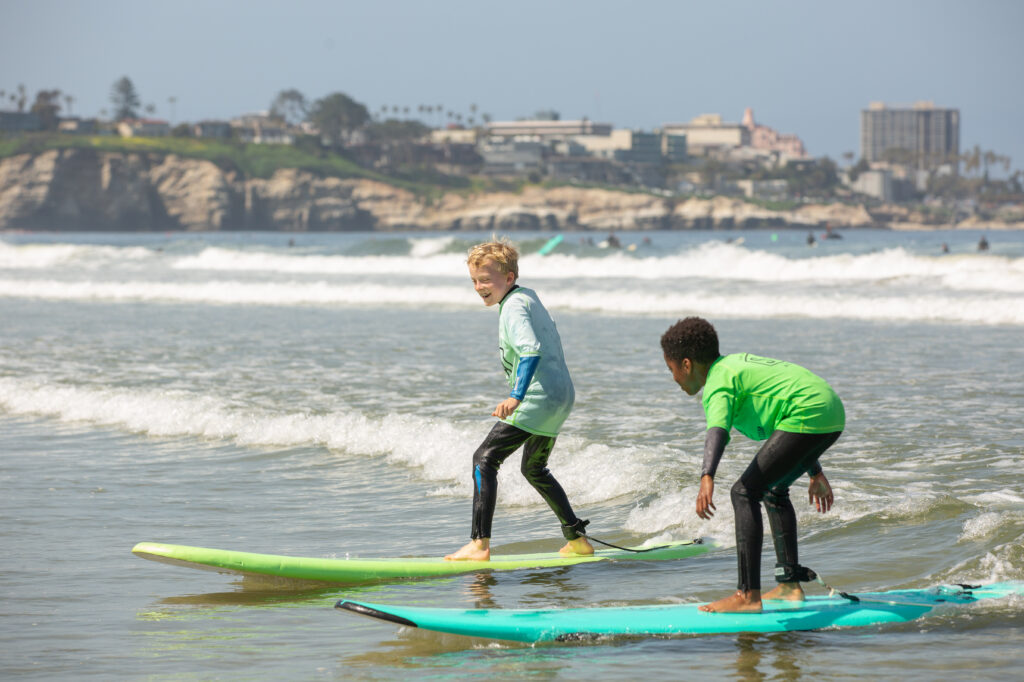
The sandbar is the whole reason we’re here. La Jolla Shores has a long, flat sandbar just under the surface. It’s why every legitimate surf school in San Diego operates at this beach. Our coaches can stand shoulder-deep right next to your kid on every single wave — that’s a safety and learning advantage you can’t get anywhere else. It also means your kid is in and out of the water a lot throughout the day, which is exactly why the dry-gear transitions on this list matter more than parents expect.
The 23-Item Coach-Approved Packing List
Sun & Skin Protection
1. Reef-safe sunscreen — lotion, SPF 50+
La Jolla Shores is right next to a Marine Protected Area. That means chemicals like oxybenzone and octinoxate aren’t just bad PR — they actually harm the ecosystem here. Use mineral-based, reef-safe formulas. Apply at home before you leave, then reapply every two hours. Ears, nose, lips, and chest especially — those are the spots kids always miss.
Oh, one thing: use lotion, not spray. We know spray is easier. But it doesn’t stay on as long, doesn’t protect as well in wind and water, and in our experience that difference shows up as a sunburn by the afternoon session. Lotion is more reliable. Just do it at home so drop-off is smooth.
2. Wide-brimmed hat or surf cap
Scalp, face, ears — three spots that always get burned and never get enough credit. Morning marine layer keeps things mellow early, but the mid-day UV swing is real. If you want something built for this, there are surf-specific hats with waterproof material, chin straps, and back-neck flaps. Check out La Jolla Surf Systems — we stock a few good ones.
3. UV rash guard or swim shirt
Double duty: blocks sun and prevents board rash. Some kids like wearing one under the wetsuit, which totally works. Just know that S.E.A. gives every camper a jersey during sessions as part of our color group system — so the rash guard is mainly useful before and after water time.
4. Lip balm with SPF
Ask literally any of our instructors about this one. They’ll all say the same thing: “Lip burns are the worst — you can’t eat or smile without it hurting.” Lips always get forgotten. They always get burned. SPF lip balm takes zero extra effort. Toss it in the bag.
5. Sunglasses with a strap
Good eye protection for older kids, especially on long bright days. The strap is non-negotiable — without it, glasses disappear by lunchtime.
Parents ask us sometimes: can my kid use goggles? We don’t recommend it. In surf, goggles can shift or create suction and cause eye irritation or injury, especially prescription ones. Sunglasses with a strap are the right move for the beach.
Warmth & Dry Gear
6. Lightweight hoodie or fleece
Honestly, this might be the most underestimated thing on this entire list. La Jolla mornings plus post-session wind chill means kids without a warm layer between sets start mentally checking out. They stop wanting to go back in. A dry hoodie after that first session is the literal difference between “one more wave!” and “I want to go to the car.” We cannot stress this enough.
7. Poncho towel — or a big labeled beach towel
A regular beach towel is fine. But if you want to level up, get your kid a poncho towel — the big oversized hoodie-style towel that goes over them like a dress. They can change out of a wetsuit with privacy, stay warm between sessions, and honestly they look hilarious and love it. Parents who discover poncho towels never bring a regular towel to camp again.
Whatever you bring — label it. Camp beach areas are busy and unlabeled stuff disappears. A dry towel post-session is a huge morale moment and it needs to be their towel when it arrives.
8. Extra change of clothes — full outfit
Wet wetsuits are miserable. Trust us. Pack a shirt, shorts, and underwear in a dry bag in your car so it’s ready at pickup. Some kids also do well in compression shorts or underwear under the wetsuit — if your kid is sensitive to wetsuit material against skin, it’s worth trying.
9. Small wet/dry bag or zip-lock for wet gear
Separates the soaked stuff from the dry stuff. Big deal for multi-session days. Prevents mildew. Also prevents your car’s backseat from becoming a saltwater situation.
Hydration & Fuel
10. Refillable, labeled water bottle — eco-friendly is great
Surfing is real cardio. Kids paddle, wipeout, paddle again, repeat — and don’t realize how dehydrated they are until they’re out of the water and already cranky. At least 16–32 oz for a half-day session.
We remind kids to drink at every break because they will absolutely “forget” even with the bottle right in front of them. Still — label it, because bottles grow legs at the beach.
11. Healthy snacks — and one comfort food
Granola bars, fruit, crackers, trail mix — all good. Avoid anything heavy, greasy, or super sugary. Heavy food before paddling causes nausea. Sugar spikes cause crashes right when the afternoon session starts.
Here’s one we don’t see on other packing lists: pack one comfort food too. Something your kid loves and reaches for when they need a reset. Camp days can bring nerves, especially day one, and a familiar snack does something for a kid’s mindset that a granola bar just can’t. Food always helps.
And please — let us know about any food allergies ahead of time. Note it in the pre-booking forms. We want everyone safe and comfortable.
The three things we trace most mid-week meltdowns back to: sunscreen wearing off by mid-morning (quiet discomfort building before anyone notices it), missed snack break (blood sugar crash by session three), forgotten water bottle (fatigue by the afternoon that looks like attitude). This list takes care of all three.
Gear & Logistics
12. Secure, comfortable swimsuit
Has to stay put in waves — that’s really the only rule. For girls, high-waisted or side-tie options work way better than front ties, which loosen in the surf. Kids who spend sessions adjusting their suit lose focus fast. Comfort here directly affects learning.
13. Flip-flops or sandals
The walk from La Jolla Shores parking to the sand is longer than most families expect. Summer pavement gets hot. Easy on, easy off for transitions. Save bare feet for the sand itself.
14. Backpack with a zipper — yes, specifically a zipper
Keeps everything organized. And here’s the real reason for the zipper: La Jolla Shores seagulls are bold, shameless, and opportunistic. An open bag on the beach is basically an invitation. We want your kid’s snacks and belongings safe from all creatures, including the feathered ones.
15. Hair ties or headbands — pack a few extra
Saltwater tangles hair fast and completely. Kids with long hair who don’t have ties spend the whole session distracted and annoyed. Pack more than you think you’ll need, because they disappear too.
16. Travel-size wipes or hand sanitizer
Beach hygiene is genuinely tricky. Wipes handle hands before snacks and after restroom breaks, and keep minor scrapes clean in a sandy environment. Small but worth it.
17. Small first aid bag — labeled with your kid’s name and info
Bandages and antiseptic wipes cover most of what comes up. Surfboard wax and board edges create friction points on feet, hands, and ankles that nobody tells first-timers about — a couple blister bandages can save an afternoon session. Please keep anything specific in a labeled bag with your child’s name and relevant info so our coaches can grab it quickly if needed.
18. Prescription meds and EpiPens — accessible, not buried
Original containers, clearly labeled, with written instructions. Note it in the pre-booking forms before camp starts and check in with our coaches directly on day one. EpiPens and inhalers need to be reachable right away — not at the bottom of a bag under a towel. Our coaches need to know in advance. Not during something.
19. Waterproof name labels or a permanent marker
Label the backpack, towel, water bottle, hoodie, snack bag — everything. Camp environments are busy and fast-moving. Labeled gear gets returned. Unlabeled gear just… goes. Five minutes the night before saves a week of headaches.
20. Pocket card with parent contact info — for younger kids, ages 6–9
A small card in the backpack with your phone number and pickup info. Reassures our staff and reassures your kid. Takes thirty seconds to make.
21. Small comfort item for younger campers
A favorite toy, small book, card game — something for downtime between sessions. New environments bring nerves, especially for littles, and something familiar from home really does help. We love when comfort items reflect the surfer’s personality. Sometimes it becomes a conversation starter with other campers, and that’s kind of the best.
22. Camp forms and waivers — done before you arrive
S.E.A. sends all of these pre-camp. Please complete them before you show up. Nobody wants to be at the registration table filling out paperwork while their kid is already looking at the waves.
23. A good attitude — yours and theirs
The only thing on this list you can’t pack the night before. Learning to surf is hard. Kids fall. They get tired. They get frustrated sometimes. Remind them before drop-off: every wipeout is information. Every single one. The best surfers in the world are good because they fell more than everyone else, not in spite of it.
And your energy matters. If you’re excited at drop-off, they walk to the sand excited. That sets the whole week.

5 Nice-to-Have Extras (Not Required, But Parents Love Them)
- Small insulated snack bag — keeps fruit fresh through the morning session in summer heat
- After Sun Care Cream or Aloe vera in the car — for post-camp skin relief if the sun got a little ahead of you
- Extra rash guard — in case the provided one needs a rinse or gets misplaced mid-week
- Beach chair — if you’re staying to watch, the view from the sand at La Jolla Shores on a clear morning is genuinely worth it
- Notebook or Drawing Book — the first stand-up wave is a moment, having kids draw or write about their feelings is great to remember their growth.
Packing By Age
Ages 5–9 — SEA Groms
Keep the bag simple and light enough that they can manage it themselves — that matters for their confidence. Include one comfort item for downtime. Label absolutely everything. Put a parent contact card in the backpack.
S.E.A.’s Mini Groms program is built specifically for ages 5–7 — shorter sessions, longer breaks, a 4:1 instructor ratio, and curriculum designed for where younger kids actually are. Mention it at booking and we’ll get them set up right.
Ages 10–15 — Tweens and Teens
Let them own it. Have them pack their own small pouch with sunscreen, lip balm, and snacks. Walk through the camp routine the night before — when to eat, when to drink, how to ask for help. Teens who feel trusted with their own preparation genuinely learn faster in the water. Independence in the bag shows up as independence on the board. We see it every summer.
Adaptive Surfers
Same core list — what changes is the conversation. Reach out to our coaches before camp starts. Let us know about sensory sensitivities, ADHD, allergies, mobility needs, or any gear your child uses at home. We offer an adaptive surfing program and have real experience making the camp work for every kind of surfer. Your kid’s needs are something we work with, not around.
Local San Diego Parent vs. Traveling / Vacation Parent — Here’s What Actually Changes
We get families from both worlds every single summer. San Diego locals who live 15 minutes away and families flying in from Texas, Chicago, New York, you name it. And honestly? The camp experience is the same. Same waves, same coaches, same stoke.
What’s different is the logistics. How you pack, what you buy, what you borrow, and what’s just not worth hauling across the country.
Here’s the quick breakdown:
🏡 You’re a Local San Diego Family
You’ve got a car, a house, and probably a Target or a REI nearby. This is the easiest situation to be in.
What this means for you:
- Don’t buy anything yet. Come to camp first, see what your kid actually needs, then shop after week one. La Jolla Surf Systems is steps from the beach — grab what you need when you know you need it.
- Your backup bag lives in the car all week. Extra sunscreen, change of clothes, snacks, hair ties, a spare towel — just keep it in the trunk. It’ll save you at least twice.
- You can wash and reuse. Poncho towel, hoodie, swimsuit — just run them through laundry each night. You don’t need multiples of everything.
- Reef-safe sunscreen is easy to find locally. Whole Foods, CVS on La Jolla Blvd, La Jolla Surf Systems — you’ve got options. Don’t stress about this one.
- You can borrow or trial gear before buying. If your kid catches the bug mid-week and starts asking about their own board or wetsuit — great. Come into La Jolla Surf Systems, try some things, and buy with info instead of guessing.
The one thing locals get wrong: Assuming they can always run home and grab something. La Jolla Shores parking and summer traffic make “quick trips” into 45-minute situations. Pack the bag the night before like you mean it.
✈️ You’re Traveling / On Vacation
First — awesome. La Jolla is genuinely one of the best places to put surf camp into a family trip. You made a great call. Now let’s make sure the packing doesn’t stress you out.
What this means for you:
- The 23-item list is your carry-on filter, not a shopping list. Most of it — towel, swimsuit, sunscreen, snacks, water bottle, hoodie, flip-flops — you already own and should bring from home. No need to buy new versions just for camp.
- Do NOT pack a surfboard or wetsuit. We provide both. Seriously. That’s luggage you don’t need.
- Buy sunscreen when you land, not at the airport. Airport sunscreen is expensive and usually not reef-safe. Pick up a reef-safe mineral SPF at any San Diego drugstore or Whole Foods when you arrive. Much better and cheaper.
- Poncho towels are a great travel buy. They’re lightweight, pack small, and your kid will use it every day of vacation — not just surf camp. Worth getting one here if you don’t have one.
- Plan for wet gear in the hotel room. After sessions, wetsuits and swimsuits need to hang and dry. Ask your hotel for extra hangers. A small over-the-door hook works great. A wet/dry bag keeps the soaked stuff from ruining everything else in your luggage.
- Renting vs. buying extra gear: We’ve got you covered on boards and wetsuits — that’s done. For everything else (beach chairs, extra towels, a cooler), most vacation rentals in La Jolla have beach gear you can borrow. Check before you buy.
The one thing traveling families get wrong: Overpacking gear “just in case.” A hard-shell suitcase full of beach stuff you’re going to lug through an airport is nobody’s good time. Camp takes care of the surf gear. You just need the personal comfort items.
Side-by-Side: Local vs. Traveling Parent at a Glance
| Local SD Family | Traveling / Vacation Family | |
|---|---|---|
| Surfboard | Provided by S.E.A. — or bring own approved board | Provided by S.E.A. — definitely don’t pack |
| Wetsuit | Bring Your Own or Rent From Us | Bring Your Own or Rent From Us |
| Reef-safe sunscreen | Buy locally anytime | Buy local (La Jolla Surf Systems) for hook ups |
| Poncho towel | Great to have, easy to get locally | Buy here — or borrow from friends |
| Extra change of clothes | Keep in car trunk all week | Pack 2–3 sets, they will be soaked daily |
| Hoodie / warm layer | One is enough, wash nightly | Bring 2 — harder to dry quickly in a hotel |
| Backup snack bag | Lives in the car | Keep in your day bag — always with you |
| Beach chair | Easy to grab from home | Rent from La Jolla Surf Systems, our location shop |
| Buying gear mid-week | Easy — La Jolla Surf Systems is right there | Same — swing by before or after sessions |
| Wet gear drying | Hang at home overnight | Hang in hotel room, use wet/dry bag in luggage, or freezer big sized zip-lock bags |
| Extra towels | Grab from the linen closet | Ask hotel for extras — they always have them |
Bottom line: whether you’re 10 minutes away or 10 hours away, the camp experience is identical. La Jolla Shores doesn’t care where you flew in from. The ocean is the same for everyone.
The only real difference is how you handle the between-session logistics. And now you know how.

FAQ — The Stuff Parents Always Ask Us
Do we need to buy a surfboard or wetsuit? Nope. We provide everything — soft-top boards, wetsuits, rash guards, all matched to your kid. If you want to check out gear for practice outside camp sessions, swing by La Jolla Surf Systems at 2132 Avenida De La Playa — that’s our home shop and we’re happy to help.
Can my kid bring their own board? Yes, with one caveat. We strongly prefer soft-top or hybrid soft-top boards. Kids always want to bring hard-tops, and we just want to make sure skill level and safety are aligned with what we teach before we have those in the water with us. Camp boards are the safest and most skill-matched starting point for almost everyone.
What should they wear to camp — and home from camp? Arrive in comfortable clothes — shorts, t-shirt, light jacket. Bring a full outfit change in the car for the ride home. Kids come out of sessions in a swimsuit or rash guard, which is cold for car rides. Bring an extra bag or towel to wrap the wet wetsuit in. That wetsuit will be soaked.
What if they forget something? Keep a backup bag in your car — extra snack, sunscreen, hair ties, change of clothes. That covers most situations. For anything bigger, contact us directly or stop by La Jolla Surf Systems on the way. Don’t let one forgotten item tank the day.
Allergies or medications? Note it in the pre-booking forms and tell our coaches in person on day one. Bring meds in the original labeled containers with written instructions. EpiPens and inhalers need to be easy to grab immediately — please don’t bury them. We really mean that.
What time should we arrive? Where do we park? Aim for 30–45 minutes before camp starts. AM sessions kick off at 8:30am — wrangling a kid into a wetsuit and getting them sunscreened up takes way longer than you’d think, especially day one. PM sessions start at 1pm, and summer afternoon parking at La Jolla Shores fills up early, so give yourself buffer. For exact drop-off spots and parking maps, check your pre-camp confirmation email from us. That’s the source of truth, not this blog.
One Last Thing Before You Start Packing
Your kid is going to stand on a wave this week. Maybe day one. Maybe day three. But it’s going to happen — because La Jolla Shores gives them every possible advantage, and our coaches have seen 500+ kids do exactly this, every single one of them thinking they couldn’t before they did.
All this packing list does is make sure that when that moment comes — when they look back at the beach from the top of a moving wave for the first time — they’re not distracted by a sunburn, a growling stomach, or a chill they can’t shake.
They’re just there. On the wave. Fully in it. Learning what the ocean can teach them.
That’s the whole point of all of this.
Summer 2026 sessions are filling up now. Morning, afternoon, and full-day options for ages 5 through 15.
Save your spot — we’ll see you at the water.
 How Surf Education Academy Builds Confident Young Surfers at La Jolla Shores